
Kodak Instamatic X-15: Where It Started
There are cameras in my collection that are rarer than this one. Cameras that are more beautiful, more complicated, more valuable and certainly more capable.
But none of them could have been No. 001.
Because this was my first camera.
I was a child when I got my Kodak Instamatic X-15. Long before photography became my profession, before interchangeable lenses and Lightroom and thousands of images from a single wedding day, there was this little black-and-silver box.
And it really was remarkably simple.
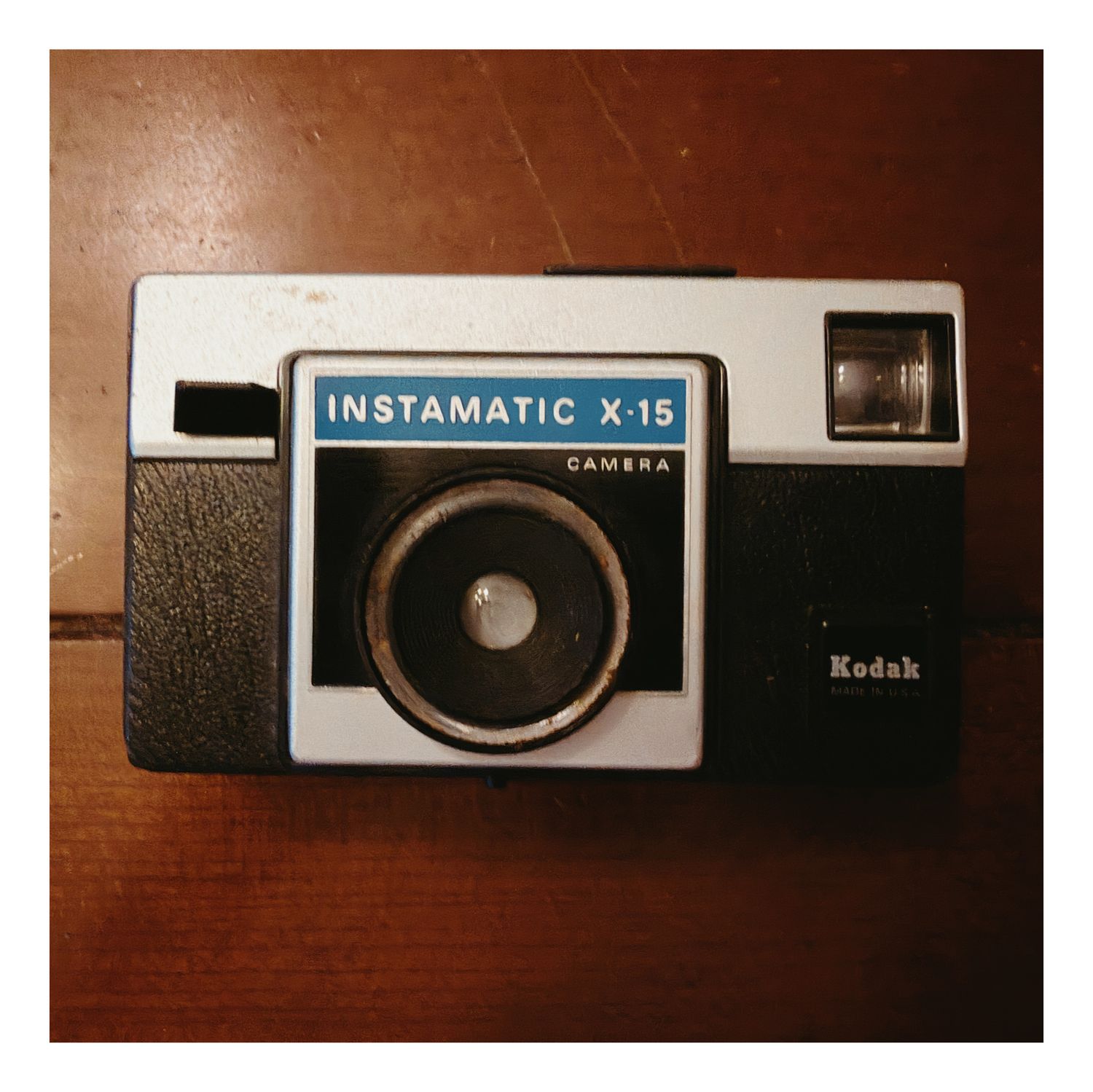
Introduced in 1970, the Kodak Instamatic X-15 was designed for 126 cartridge film. Instead of threading a roll of film onto a spool and hoping you'd done it correctly, you dropped a cartridge into the camera, closed the back, advanced the film and started making pictures.
That simplicity was the whole idea behind the Instamatic.
Kodak had introduced 126 cartridge film with the original Instamatic cameras in 1963, helping make loading a camera dramatically easier for everyday photographers. The format became enormously successful; roughly 60 million Kodak 126 Instamatic cameras were sold by 1976.
A Camera That Didn't Ask Much of You
The X-15 wasn't interested in giving its photographer a lot of decisions.
Its 43mm f/11 lens was fixed focus. It produced a nearly square 28×28mm image on 126 film. There was no autofocus system, no LCD screen, no exposure compensation dial and definitely no menu containing 200 things you could accidentally change.
You looked through the viewfinder.
You decided what belonged inside the frame.
And you pushed the button.
For flash, things got considerably more entertaining.
The X-15 was one of Kodak's cameras designed to use the Magicube—a little cube containing four flashbulbs. As the film was advanced, a fresh bulb could be positioned for the next photograph. Unlike earlier electrically fired Flashcubes, Magicubes didn't require a battery to ignite.
Four flashes.
Then you needed another cube.
Photography was weird.

The Part I Couldn't Have Known Yet
What I love about this camera now isn't really its specifications.
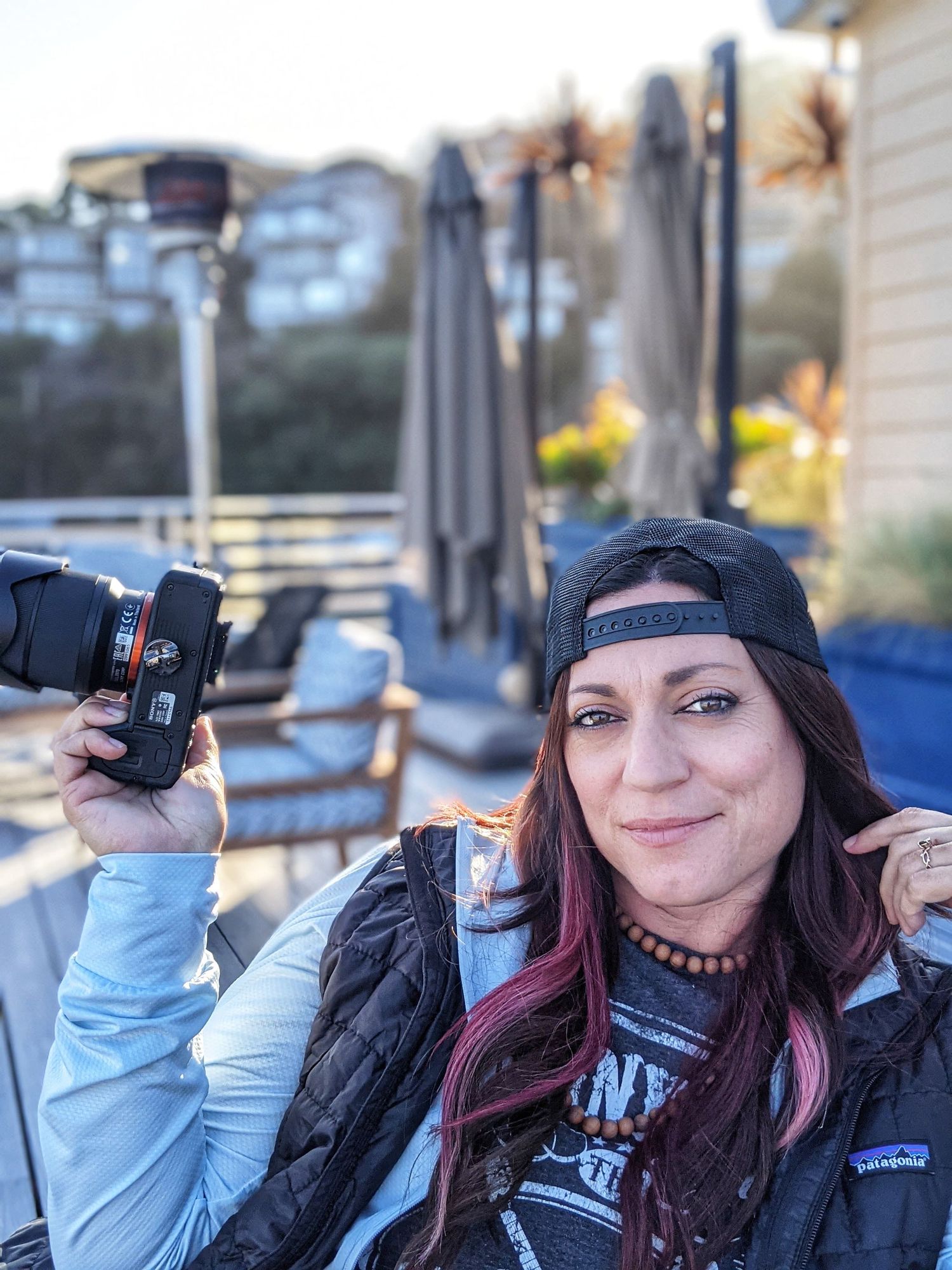
It's that the child holding it had absolutely no idea what she was starting.
She wasn't thinking about becoming a professional photographer. She didn't know she'd someday photograph weddings and races and families and communities. She didn't know there would eventually be cameras capable of focusing on someone's eye almost instantly or memory cards holding thousands of photographs.
She just had a camera.
And suddenly she could decide where to point it.
That's the part that feels important to me now.
Technology has changed nearly everything about the way I make photographs. The camera I work with today would have seemed like science fiction when the X-15 was made.
But the fundamental act hasn't changed much at all.
Something catches my attention.
Light falls somewhere beautifully. Someone makes an expression that lasts half a second. Something ordinary suddenly doesn't look ordinary anymore.
I raise a camera because I want to keep it.
Maybe that's what this little Kodak taught me before I knew I was learning anything at all:
Point it at something worth remembering. Push the button.
Everything else came later.


Photographic Oddities is a weekly trip through my collection of vintage cameras—the beautiful ones, the strange ones, the clever ones and the ones that make you wonder what on earth camera designers were thinking.
It seemed only right to begin with the one that started mine.
Kodak Instamatic X-15 · 1970–1976
126 cartridge film · 43mm f/11 fixed-focus lens · 28×28mm image · Magicube flash
Next week, another camera comes off the shelf.